Flare
- 4.6
- Rating
- 10.00K
- Installs
- Free
- Price

 Analysis by App-foxy
I first approached Flare as a possible replacement for the scattered group chats, event threads, and quick planning conversations that tend to fill a phone. It is a free social app from Flare App, Inc., built around bringing group activity into one place. After spending time with it, my impression is that its appeal is less about being another general-purpose social network and more about giving groups a shared space with a clearer purpose.
That distinction matters. If you only want to send occasional messages to one other person, a conventional messenger will probably feel faster. If you regularly coordinate friends, classmates, clubs, family plans, or informal teams, Flare makes more sense. It is aimed at the messy middle between a normal chat app and a full project-management tool: more organized than a stream of messages, but less formal than software designed for workplaces.
How Flare feels in everyday group use
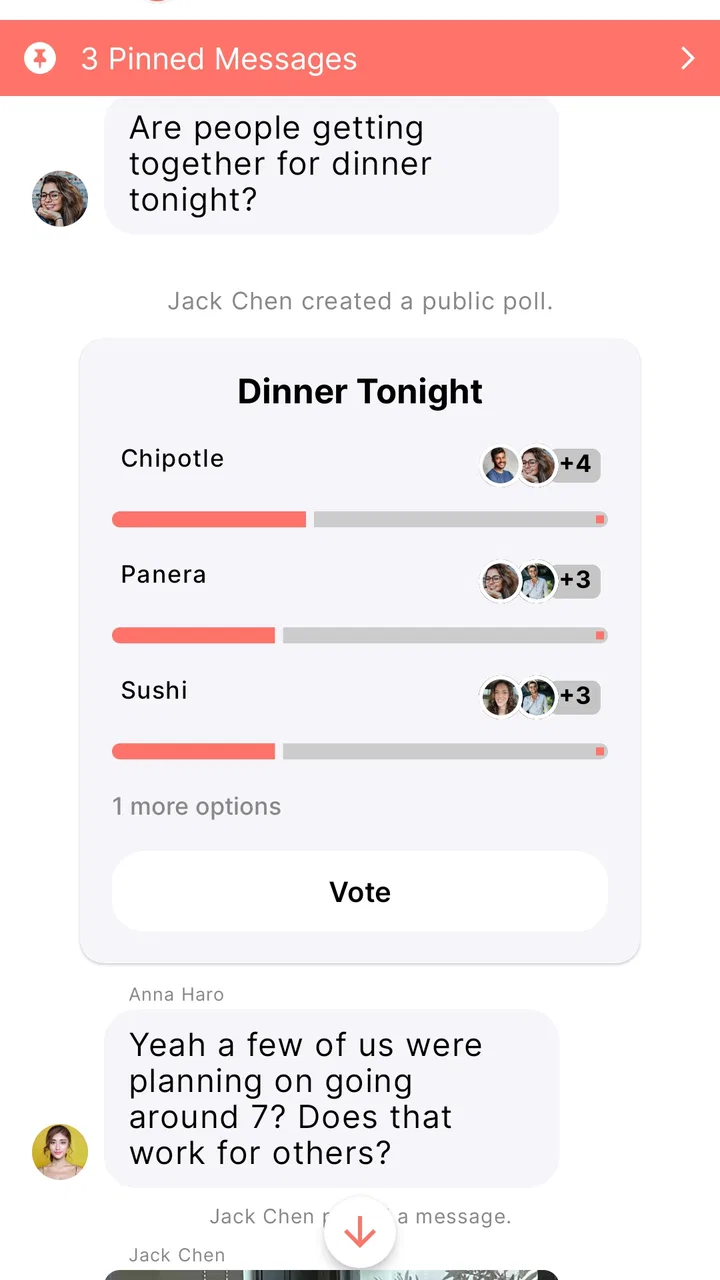
The first useful test is not whether an app looks polished on its own, but whether it reduces the small frustrations that appear when several people are trying to do something together. A group may need to decide where to meet, keep track of who is involved, share a few updates, and return to the conversation later without losing the important part under unrelated messages. Flare’s central idea is well suited to that situation because it treats the group as the main unit rather than treating every interaction as an isolated private conversation.
You May Also Like

 AccuWeather: Weather Radar
AccuWeather Review: A Quick, Clear Forecast for Everyday Decisions
For everyday plans, the best forecast is the one you can understand quickly. AccuWeather makes rain timing, radar, and local conditions easy to act on, with a few trade-offs.

 Hill Climb Racing
Why Hill Climb Racing Still Turns Crashes Into One More Run
A tiny car, a bumpy hill and one more upgrade: Hill Climb Racing keeps resurfacing because its simple chaos makes every near-miss feel personal.

 AliExpress - Shopping App
AliExpress Makes Global Shopping Feel Personal, but Shoppers Bear the Risk
AliExpress turns a global marketplace into a pocket-sized discovery engine. Its reach is useful, its shopping loop compelling, and its trade-offs easy to miss.

 Lords Mobile: Kingdom Wars
Lords Mobile Is a Kingdom-Building Routine, Not a Quick Match
A case-by-case verdict on the building, battles, device demands, and social commitments that make Lords Mobile rewarding for some players and exhausting for others.

 PDF Scanner app - TapScanner
TapScanner Makes Paperwork Easier to Capture, Check, and Share
TapScanner makes scanning with a phone feel less like a rescue operation and more like a dependable step in getting work done. Its capture tools are useful, though not flawless.

 Block Blast!
 Shows How Much a Puzzle Game Can Leave Out
A quiet grid game shows why puzzle players increasingly value instant clarity, repeatable skill and low-pressure play—and where the genre still needs to catch up.
More From Our News Desk
View All News


I can imagine using it for a weekend plan where one person suggests an activity, another shares a change of timing, and everyone needs the same context. The practical advantage is that the conversation has a defined home. Instead of relying on one person to repeat the details to latecomers, a group space can keep the discussion connected to the people who actually need it.
That also makes the app useful for recurring groups. A neighborhood activity, study circle, sports group, or volunteer team often has the same people communicating about different occasions. Starting a fresh chat every time can make older information difficult to find, while keeping everything in one endless thread creates its own clutter. Flare is most interesting when you want continuity without turning the group into an overly formal organization.
The experience is helped by its relatively focused identity. The store summary calls it an all-in-one tool for groups, but I would interpret that as a direction rather than a promise that it replaces every specialized service. It is a social app first. I would not open it expecting the detailed task assignment, document control, or reporting features of a workplace platform. Its strength is the social coordination around a shared group, not administrative depth.
A realistic scenario: planning without repeating everything
Imagine a group of friends arranging a day out. In a typical messenger, the first messages might cover the idea, later messages might change the time, and a separate thread might contain the location. Someone joining late has to scroll through the entire exchange or ask the same questions again. With Flare, I would use the group as the central reference point, keeping the plan and follow-up conversation together as much as possible.
The less obvious benefit is social rather than technical: responsibility becomes more visible. When a plan lives in a shared space, the group can see what still needs an answer instead of leaving one person to manage everything privately. That will not solve indecision, but it can make coordination feel less like personal administration.
There is a trade-off, though. A group space only becomes useful when the group actually adopts it. If half the members continue using another messenger, Flare can become an extra inbox rather than a replacement. Before moving a group over, I would agree on one simple rule: important updates belong in Flare, while urgent one-to-one matters can stay elsewhere. Without that agreement, the organizational advantage fades quickly.
Who will get the most from it
Flare suits people who think in terms of circles, activities, and shared plans. It can be a good fit for a group that needs more structure than a casual chat but does not want the formality of a productivity suite. It is also appealing for users who find ordinary social feeds too broad and noisy. The focus is narrower: join the spaces that matter to you, then use them for communication and coordination.
I would particularly consider it for a club with changing weekly details, a family that coordinates events across several households, or a student group that needs a single place for discussion. In each case, the value comes from returning to the same shared context. The app is less compelling for a person who mostly communicates individually, rarely participates in organized groups, or already has a well-established system that everyone follows.
It may also be a poor choice for highly formal teams. If you need strict ownership of tasks, advanced calendars, long-term document management, or detailed records, a dedicated work tool will likely be better. Flare’s social character is an advantage when warmth and ease matter, but it can become a limitation when accountability and process are the priority.
What the current release tells me
The current version is 6.3.8, which suggests that the app is not sitting at its earliest experimental stage. I see that as a positive sign for anyone considering it today: the product has had time to move beyond a first concept and refine its direction. At the same time, a version number alone does not tell me that every group workflow is mature, so I would still judge it by whether its approach matches the way your community communicates.
Flare was released on February 8, 2019, and its evolution is easier to understand in that context. It has had a meaningful period in which a group-focused social product could adjust to changing user expectations. The important question is not whether it has existed for a long time, but whether the current experience feels coherent. In my view, the concept remains appealing because group communication still falls between ordinary messaging and formal collaboration software.
The app has a 4.6 average from around four hundred ratings, with roughly ninety written reviews. That is encouraging, especially because written feedback can reveal whether people connect with the central idea rather than simply trying the app once. I would not treat the number as a guarantee that it will work for every community, but it does indicate that the app has found a receptive audience.
Its install count is above ten thousand, so Flare is not a mass-market service on the scale of the biggest social platforms. That smaller footprint can be read in two ways. It may mean you need to persuade your own group to try something unfamiliar, yet it also means the app is easier to evaluate on its actual usefulness rather than on the pressure to join because everyone is already there.
What changes mean for people already using it
For an existing user, the move to version 6.3.8 is best viewed as part of continued product maintenance and refinement rather than a reason to rebuild every habit. I would approach an update by checking whether the parts of my group routine still feel easy: finding the right space, understanding new activity, and returning to older information. If those basics remain clear, the value of the update is likely to be cumulative rather than dramatic.
That is important for a group app. A major redesign can create friction because every member has to adjust, not just the person who enjoys trying new software. When introducing a current version to a group, I would avoid explaining every possible function at once. Instead, I would choose one shared workflow, such as keeping event details in the group and using the conversation for changes. A narrow starting point gives people a reason to return.
Existing users should also think about notification habits. Group-focused apps can become overwhelming when every small exchange demands immediate attention. I would separate conversations that need quick responses from discussions that can wait, and I would encourage members to put essential details in a clear message rather than scattering them across many short updates. This is not a glamorous feature, but it can determine whether the app feels calm or noisy.
Another practical tip is to treat the group space as a shared memory, not merely a live chat. When someone posts a plan, I would include the key context in that same contribution instead of assuming everyone saw an earlier message. This makes the space more useful for members who return later and reduces the need for repeated explanations.
Where Flare still has limits
The biggest limitation is adoption. A group tool cannot organize people who refuse to use it, and Flare has to compete with apps that friends and relatives may already open every day. Even a better-designed group experience can lose if moving everyone feels like work. I would recommend trying it with a group that is already motivated to improve its coordination, rather than attempting to convert a large, indifferent community.
There is also a risk of over-centralization. Calling an app an all-in-one solution sounds convenient, but putting every social interaction in one place can make the space harder to manage. A group may need separate boundaries for casual conversation, important announcements, and private matters. I would not force Flare to handle every type of communication simply because it can serve as the group hub.
Compared with a normal messenger, Flare’s group orientation is its differentiator, but a messenger may still win for speed, familiarity, and one-to-one communication. Compared with a broad social network, Flare should feel more purposeful because the group is the focus rather than an endless public-style feed. Compared with collaboration software, it is likely to feel more approachable, while offering less structure for professional processes. Choosing between them depends on what kind of friction you are trying to remove.
I would also be careful with age and audience. The content rating is Teen, so parents and group organizers should consider whether the planned community is appropriate for that audience and whether members understand the social expectations of the space. This is especially relevant for school-related or mixed-age groups, where clear rules and responsible moderation matter more than the app’s basic communication features.
Small habits that make the app more useful
My first recommendation is to create a purpose before creating activity. A group called “everything” will quickly become another noisy inbox. A group centered on a recurring activity gives members a reason to check it and makes older conversations easier to interpret. This is a simple distinction, but it is one of the most important differences between a useful group hub and a neglected one.
Second, decide what belongs in the shared space. I would keep decisions, changes, and information that affects everyone in Flare, while leaving personal side conversations elsewhere. This prevents the main group from becoming a record of every private exchange and makes important updates easier to recognize.
Third, use a closing message after a decision. Once a group agrees on a time or place, someone should restate the outcome in one concise contribution. That habit creates a reliable checkpoint and is more effective than expecting members to reconstruct the decision from a long conversation. It is the kind of workflow improvement that does not appear in a short store description but can make a real difference.
Finally, review the group after a few weeks. If members still ask where information is located, the problem may not be the app; the group may need a clearer routine. If people consistently ignore the space, forcing it will not help. In that case, a familiar messenger may remain the more practical option, even if it is less organized.
What I would watch as the product continues
For future development, I would watch how Flare balances simplicity with the needs of groups that grow more active. The product’s appeal depends on being easier than formal collaboration software, but active groups eventually need ways to keep important information visible without making the experience feel bureaucratic. That balance will shape whether the app remains pleasant as a community becomes busier.
I would also pay attention to how well the app supports groups with different levels of participation. Some members post frequently, while others only check in when a decision affects them. A strong group experience should accommodate both without making quiet members feel lost or active members feel constrained. The current concept is promising, but this is the area where long-term usability is tested.
Another point worth watching is whether the app can persuade established groups to change habits. Its features matter, but the real competition is not just other software; it is inertia. A group will switch only when the benefit is obvious enough to justify inviting people, explaining the routine, and maintaining one more communication channel.
My final take on Flare
After looking at it as a daily group tool rather than as a generic social app, I think Flare has a clear reason to exist. It is best when a group needs a shared home for plans, updates, and ongoing conversation, but does not want to adopt a workplace-style system. The free price makes experimentation easy, and the current version shows a product that has continued developing beyond its initial release.
I would recommend it to a motivated club, family network, study group, or circle of friends that is tired of losing decisions inside ordinary chats. I would skip it if my communication is mostly private, if nobody in my group wants to change apps, or if I need serious project controls and formal records. Flare is most valuable when the group agrees on a simple shared routine; without that agreement, it becomes another place to check.
My honest conclusion is that this is a focused option rather than a universal replacement. It does not need to beat every messenger or collaboration platform. It only needs to make group coordination feel more coherent for the people who choose it. For the right community, that is a useful improvement, and the app is worth trying with one real group before deciding whether it deserves a permanent place on everyone’s phone.
FAQs for Flare
01What is Flare and what can I use it for?
Flare is an app designed to help users manage and access its core features from a mobile device through a straightforward interface. Depending on the version and platform, it may provide tools for communication, content, account management, or related services. Before downloading, check the official store description to confirm the current feature set, supported regions, and whether it matches your specific needs.
02Is Flare free to download and use?
Flare may be available as a free download, but some functions can require in-app purchases, a subscription, or an account with an associated service. The exact pricing and limitations can vary between Android and iOS. I recommend reviewing the app-store listing carefully before installing, especially the subscription terms, trial conditions, renewal policy, and any premium features that are locked behind payment.
03Is Flare safe and trustworthy?
Flare should be downloaded only from the official Google Play Store or Apple App Store to reduce the risk of modified or harmful copies. Before installation, review the developer name, recent user feedback, update history, and requested permissions. Pay particular attention to access involving contacts, location, camera, microphone, or personal files, and avoid entering sensitive information unless the app’s privacy policy clearly explains how it is handled.
04What devices and operating systems are compatible with Flare?
Compatibility depends on the specific Flare app and its latest release. Android and iOS versions may have different requirements, and older phones or tablets might not support every feature. Check the official store page for the minimum Android version, required iOS version, storage needs, and device limitations. Keeping your operating system updated can also help prevent crashes and improve security.
05Does Flare require an internet connection or account to work?
Many of Flare’s functions may depend on an active internet connection, particularly features involving synchronization, online content, messaging, cloud services, or account verification. Some basic sections could work offline, but this should not be assumed. You may also need to register or sign in before using the app. Review the onboarding screen and privacy settings so you understand what information is required.
Pros
- Clean
- modern interface that is easy to navigate
- Fast performance with smooth transitions and responsive controls
- Useful customization options for tailoring the experience
- Helpful notifications keep important updates easy to notice
- Works well for quick
- everyday use without a steep learning curve
Cons
- Some features may require a premium subscription
- Occasional bugs can affect reliability after updates
- Settings may feel limited for advanced users
- Notifications can become distracting if not configured
- The app may use noticeable battery during extended sessions

Flare
Gallery